
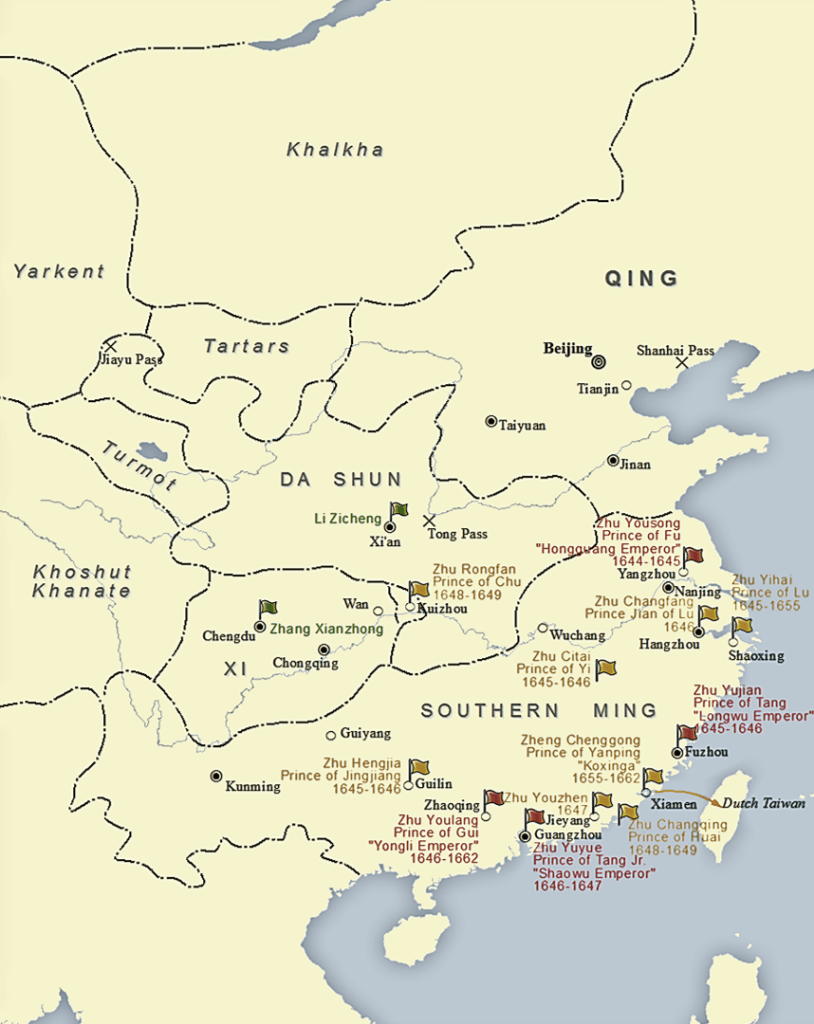
The empires arising from peasant rebel armies are depicted with green flags.
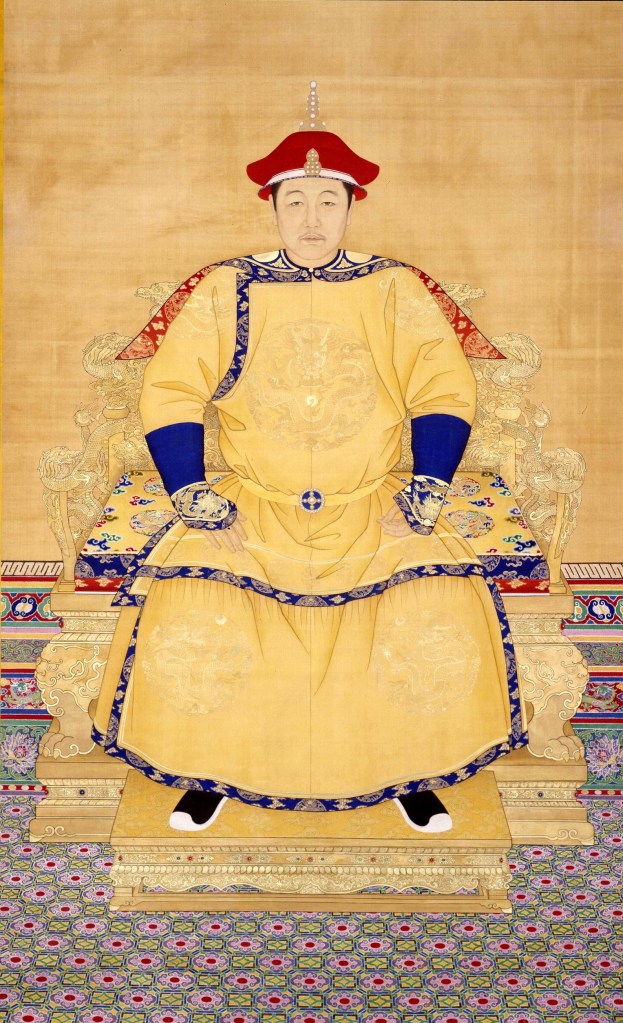
The death of the Chóngzhēn Emperor did not break the Ming. The toppling of Beijing, followed by the new court in Nanjing, only seemed to spur on loyalty to the Ming in areas not yet under Qing control. Even in Qing-controlled areas, uprisings were not uncommon.
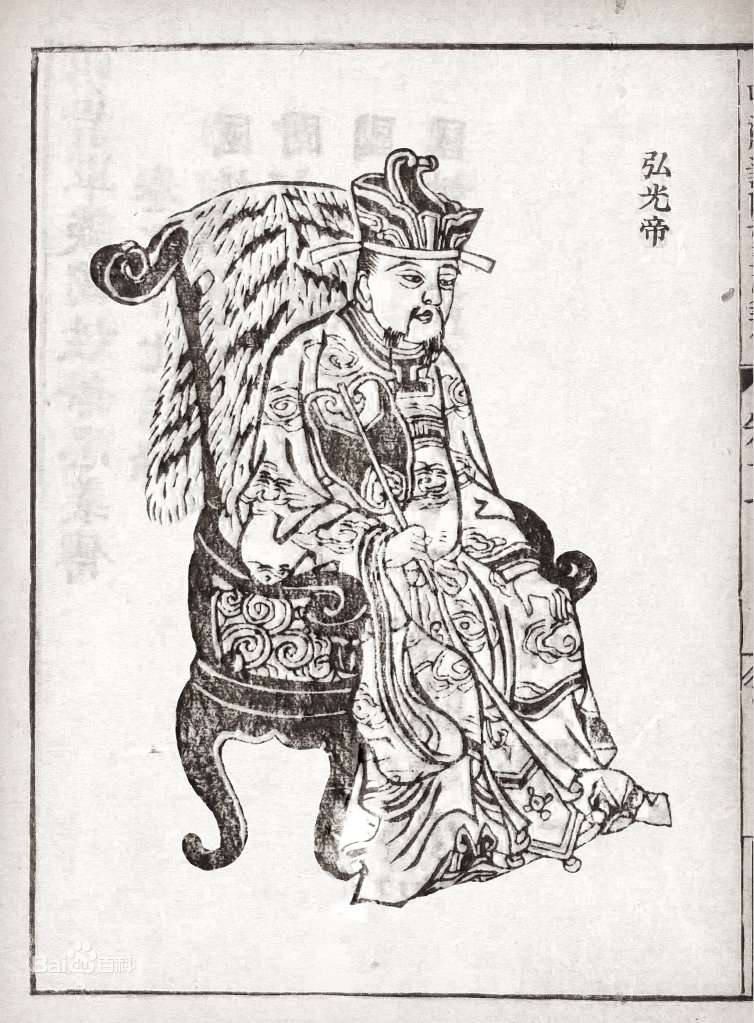
The Chóngzhēn Emperor was replaced by the Hóngguāng Emperor, but he lasted just less than a year. Upon his death, two new leaders rose up on the east coast of China – the Lóngwǔ Emperor and the Prince of Lu, claiming regency over China. They were followed in short succession by the Shàowǔ and Yǒnglì Emperors, each as adamant of their own claim to the throne as they were of resisting the Qing.
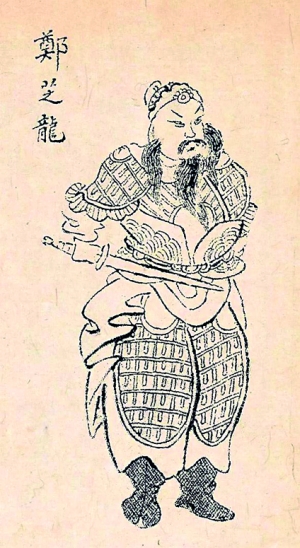
Into this mess stepped our old friend, Zhèng Zhīlóng and his son, Zhèng Sēn, who soon received two new names: Zhèng Chénggōng and Koxinga.
 Taiwan Through Time