Japanese Juxtaposition – Part 5

Thus concludes my second conversation with Chris. In this final instalment we get into what it’s like to teach in Far East Asian countries, both official schools and cram schools or bǔxíbān (補習班), analysing similarities between our experiences. There were also extensive tangents into South African trivia, including reminiscing about university. We ended up getting somewhat philosophical at times, probably courtesy of the accompanying Bain’s whisky. Plus the wildlife here insisted on being part of the recording.

At some point in the future I will do a short tangent series on teaching at the various types of schools in Taiwan, but my immediate plan (now that I’ve finished moving house and have relocated my books) is to get back into the history side of things.

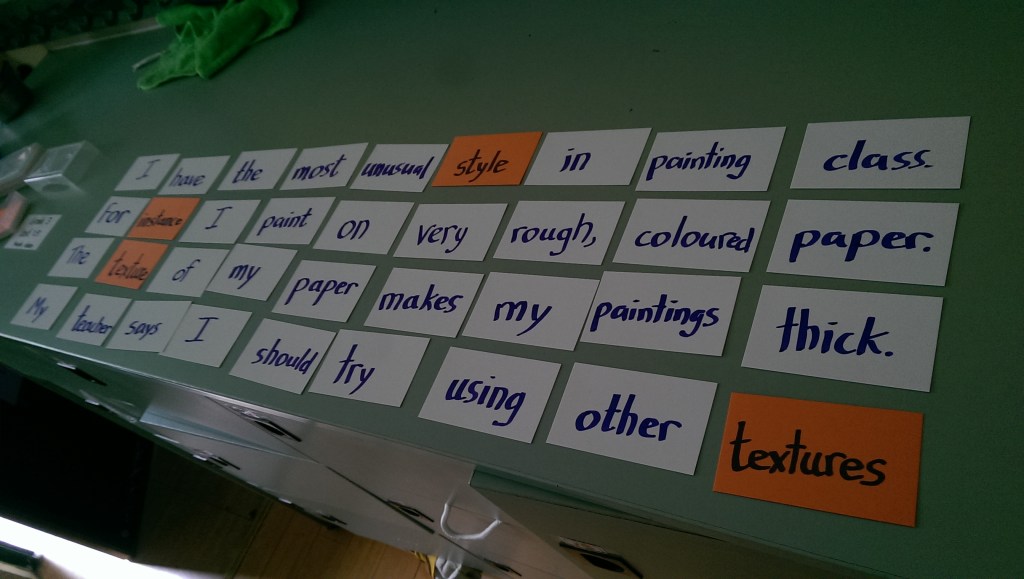
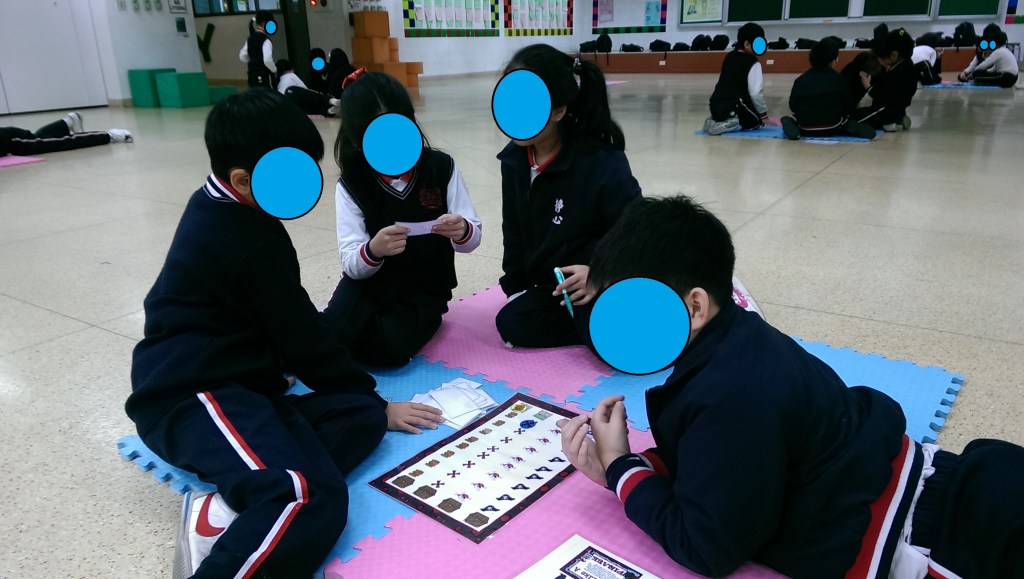
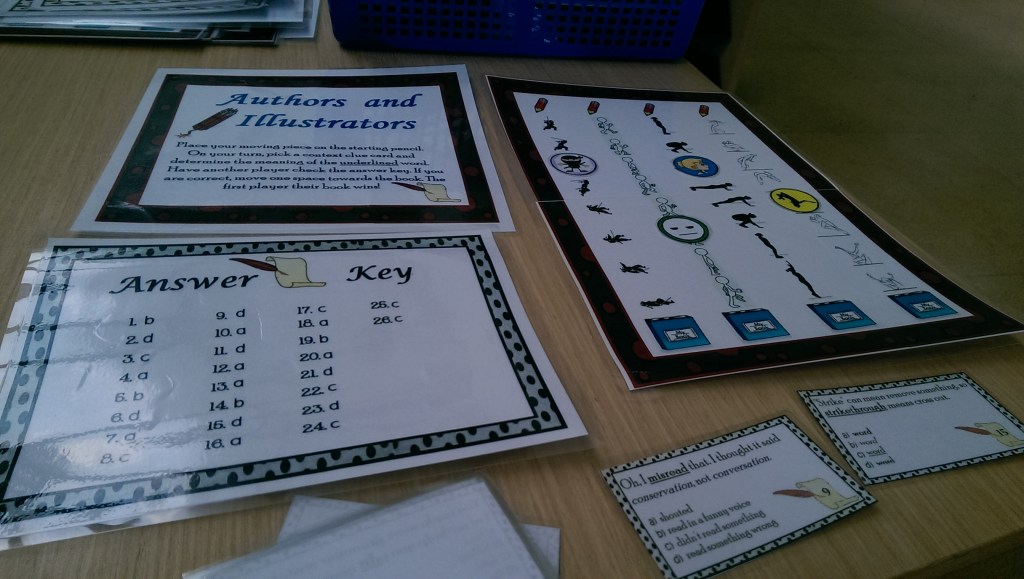
Here are some example pictures of an open learning system from my time in Taiwan, specifically for second language English at the lower primary school level.

Rhodes University in Grahamstown, South Africa, our alma mater.
Website: https://www.ru.ac.za/

Japanese Juxtaposition – Part 4

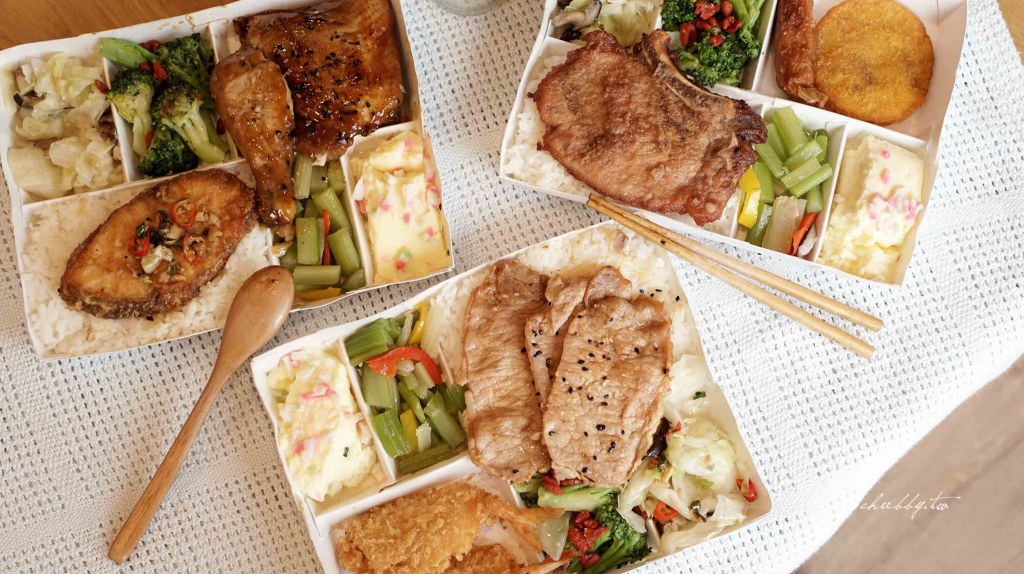
Thus begins the second conversation with Chris. In this first section we mainly discuss food and some of Chris’ experiences in Shirakawa-Shi, while going on tangents about Taiwanese biandang (便當) and places like Jiufen (九份) with its famous book shop that has Chinese and English books (to which I think this is the right link).

Also, I must apologise for the heavy thunking noises as we lifted and set our mugs of (what started out as) tea on the table that held the microphone. That and the few noises of the neighbour… scraping boxes across the floor in the room adjoining our wall? I think he was busy packing up to move – nothing to do with us, of course.

Traditional biandang (便當)
Jiufen Old Street (九份老街) by day (Viator)
Jiufen Old Street (九份老街) by night (newtaipei.travel)

Japanese Juxtaposition – Part 3

A conversation with Chris.
This is the third part of my interview with Chris. We discuss names, worldly awareness, elements of history and concepts of culture, amongst other things.

TRIVIA FROM THE EPISODE
The video by Tom Scott that was mentioned:
https://www.youtube.com/watch?v=V5u9JSnAAU4
The intro song to Mina Moo, a puppet South African TV show for children from the late 1980s.
https://www.youtube.com/watch?v=UiQAQ6kgbhE

Japanese Juxtaposition – Part 2

A conversation with Chris.
This is the second part of my interview with Chris. Our conversation flowed from South African obscurities to drinking and karaoke in Japan.

Songs mentioned in the discussion:
Fokofpolisiekar – Koma
https://www.youtube.com/watch?v=6TDqNyL2KPQ&list=RD6TDqNyL2KPQ&start_radio=1
Koos Kombuis – Lisa se Klavier
https://www.youtube.com/watch?v=eSNZar71U0A&list=RDeSNZar71U0A&start_radio=1&pp=ygUPTGlzYSBzZSBrbGF2aWVyoAcB

For those who remember Joe Merrell from the interview about Taiwan’s beer industry, here are links to see what he’s up to now.
Website
Instagram Account

Episode 32 – The Southern Ming

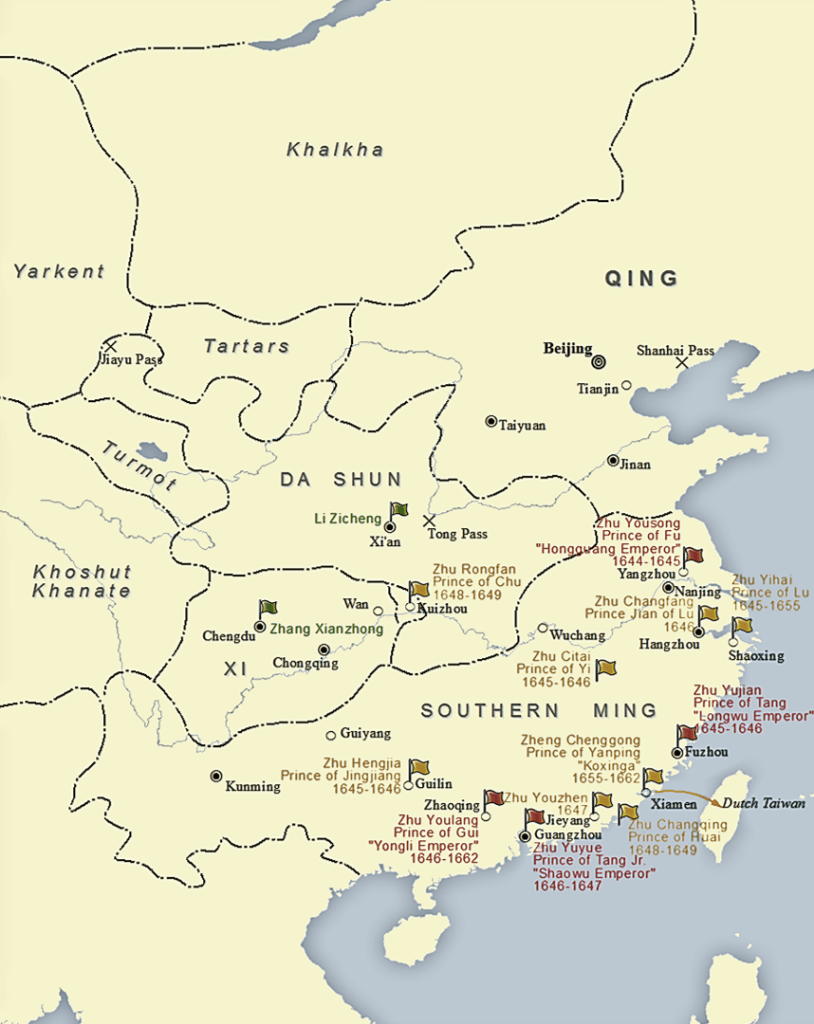
The Princes of the Southern Ming Princes are depicted in yellow and the Emperors in Red.
The empires arising from peasant rebel armies are depicted with green flags.

The death of the Chóngzhēn Emperor did not break the Ming. The toppling of Beijing, followed by the new court in Nanjing, only seemed to spur on loyalty to the Ming in areas not yet under Qing control. Even in Qing-controlled areas, uprisings were not uncommon.
The Chóngzhēn Emperor was replaced by the Hóngguāng Emperor, but he lasted just less than a year. Upon his death, two new leaders rose up on the east coast of China – the Lóngwǔ Emperor and the Prince of Lu, claiming regency over China. They were followed in short succession by the Shàowǔ and Yǒnglì Emperors, each as adamant of their own claim to the throne as they were of resisting the Qing.
Into this mess stepped our old friend, Zhèng Zhīlóng and his son, Zhèng Sēn, who soon received two new names: Zhèng Chénggōng and Koxinga.

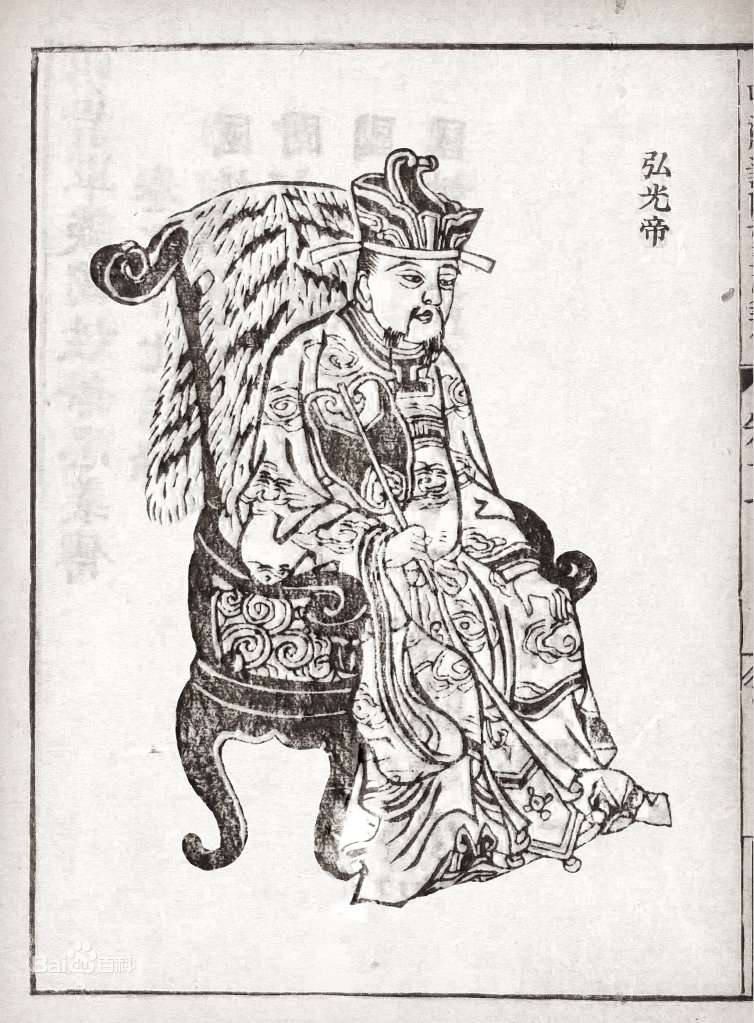
The Hóngguāng Emperor of the Southern Ming (弘光帝)
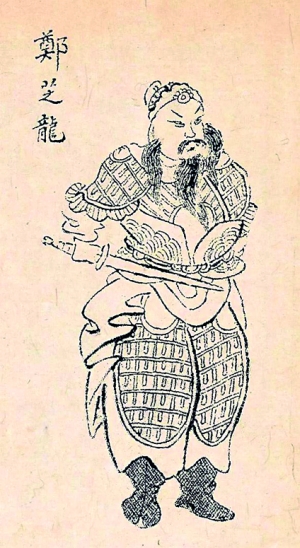
A sketch of Zhèng Zhīlóng (臺灣外記)
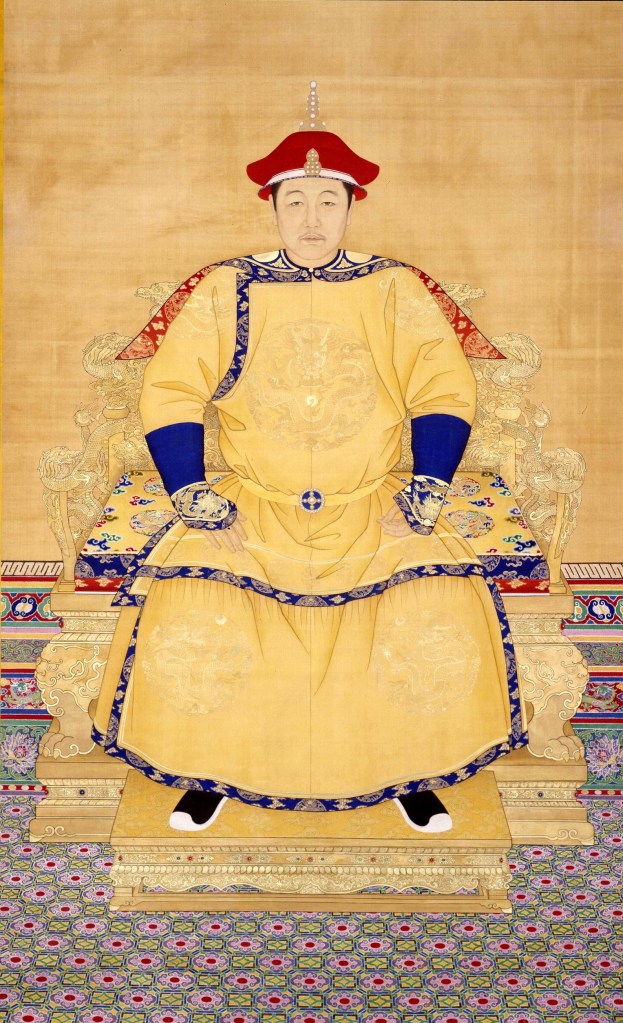
The Shùnzhì Emperor of the Qing (順治帝), known previously as Fulin and son of the former emperor Huáng Tàijí

Episode 31 – Li’s Beijing

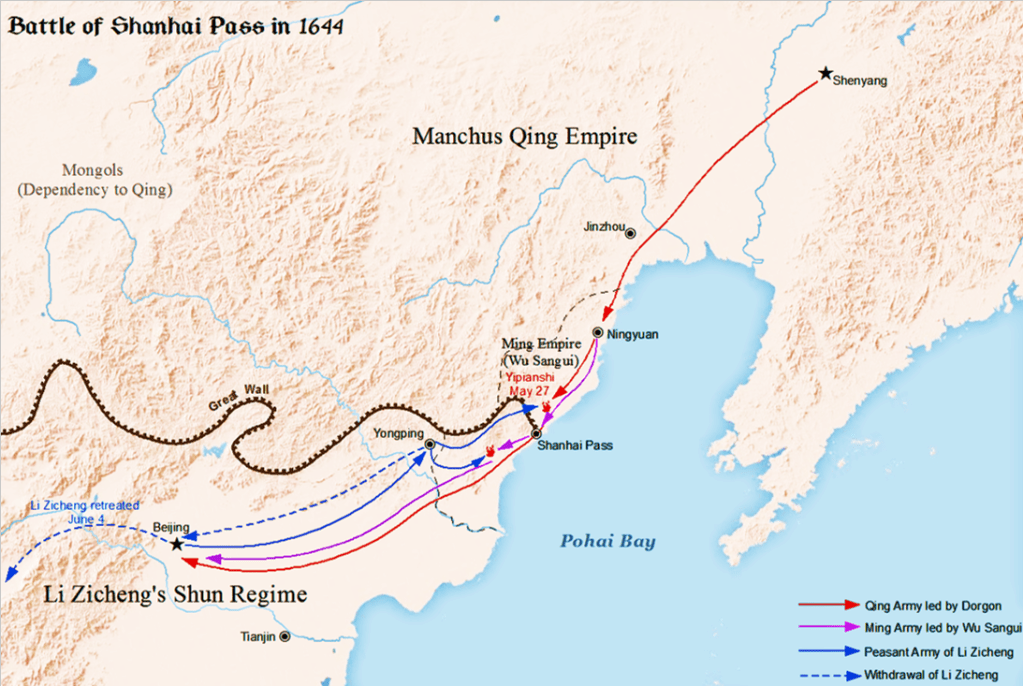
The Battle of Shanhai Pass in which Li Zhicheng’s forces are broken, leading to him fleeing and losing Beijing.

Li Zhicheng may have been a charismatic leader and a fine soldier, but when it came to running a city and, through it, an empire, he was unprepared and relied too much upon people who shouldn’t have been trusted. His soldiers, well-disciplined upon arrival, fell into corruption following on the example of their leaders, until the city practically called out to be invaded again.

Episode 30 – The Ming Broken

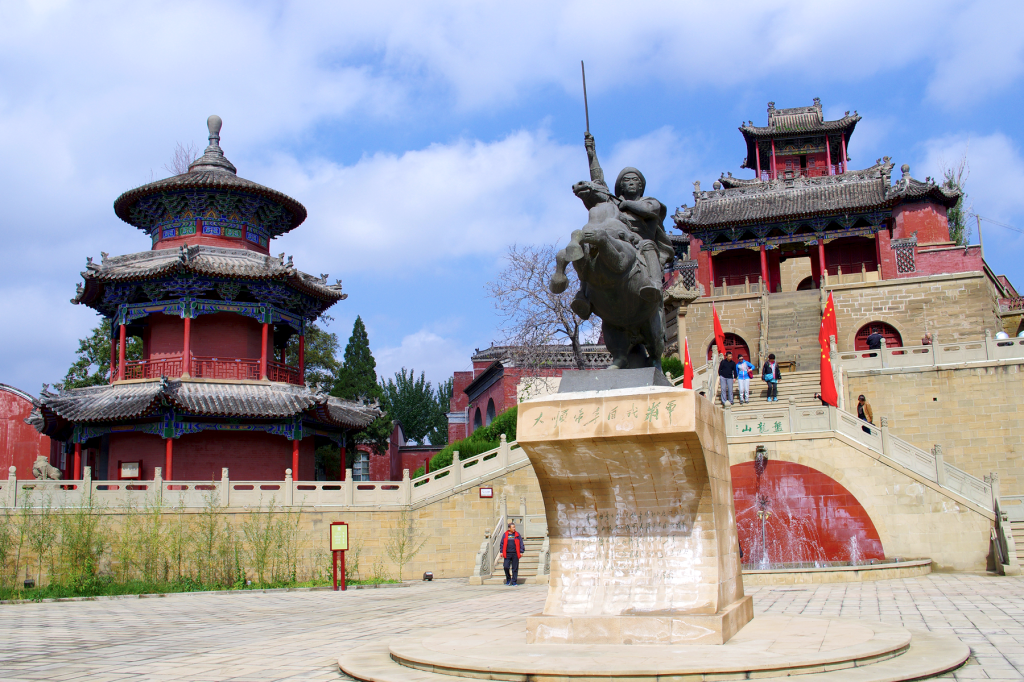
A monument to Li Zicheng in Mount Panlong, Shaanxi Province

The start of the (Lunar) New Year, 8th of February, 1644, found the Ming Dynasty in a poor state: invasions by the Manchurians (Qing) in the north east, constant pirate activity along the coast – including that of the persistent Europeans – and issues of poor harvest due to environmental factors causing widespread famine and disease, which in turn led to the rising up of peasant armies hell-bent on taking what the government could not provide for them.
One of these peasant armies was led by Li Zicheng. Who was he? Where did he come from? And how was he able to take the capital of Beijing in the name of the newly founded Shun Dynasty

Li Zicheng (李自成) a.k.a. the Yongchang Emperor (永昌帝)
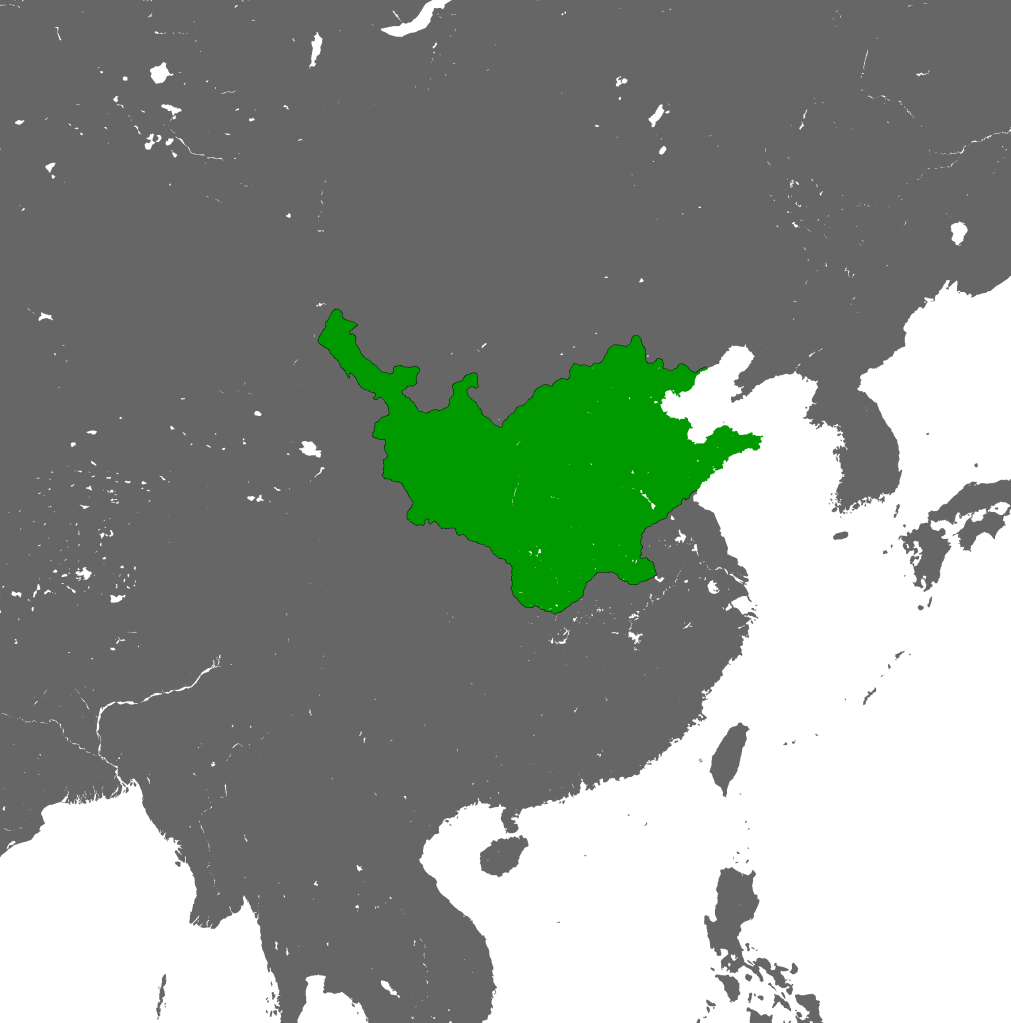
The Shun Dynasty, or Da Shun (大順), at its height in 1644

Taiwanese Society

In this episode we take a look at Taiwanese society, as viewed from a foreigner’s perspective. We look at elements of society that are likely to have shaped who the Taiwanese people are and how their society works.

Taiwan Night Markets
Two examples of riverside parks:
Guandu Riverside Park (in Taipei)
Hsinchu Riverside Park
Story about the old elephant slides of Taiwan’s parks

Episode 29 – Hong Taiji

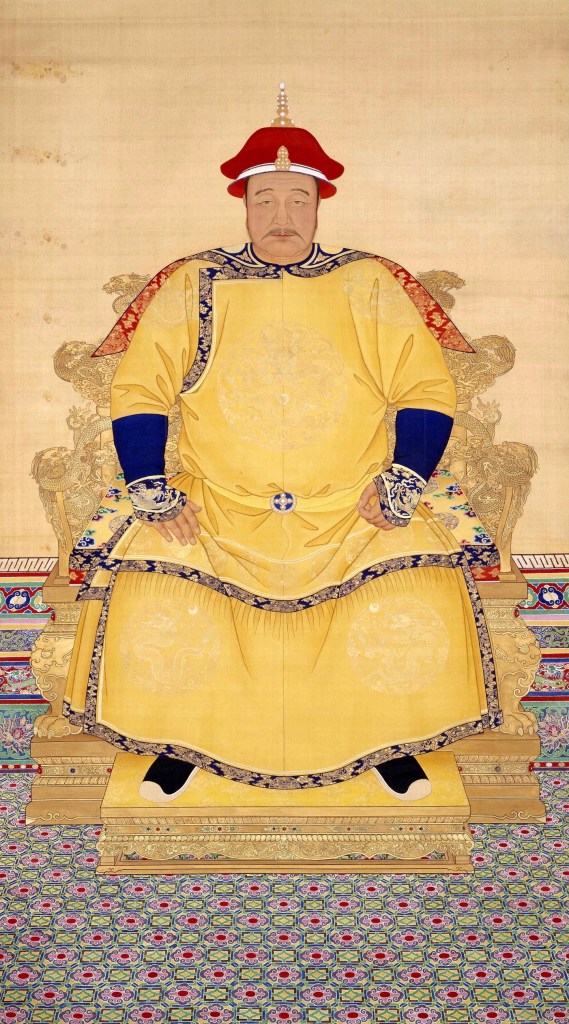
The imperial portrait of Hong Taiji, modelled after that of his father, Nurhaci.

In this episode we look at the character of Hong Taiji, the second Khan of the Jin Dynasty. We explore some of the ways in which he remodelled his father’s empire, changed his approach to the Chinese within his society and understand the reason why he chose to rename his empire and his people. From 1636 the Jin Dynasty became known as the Qing Dynasty, with the Jurchen people adopting the name Manchu.

Link to Gertraude Roth Li’s bio.
Link to a YouTube video on Hong Taiji for those who wish to study him a bit further.