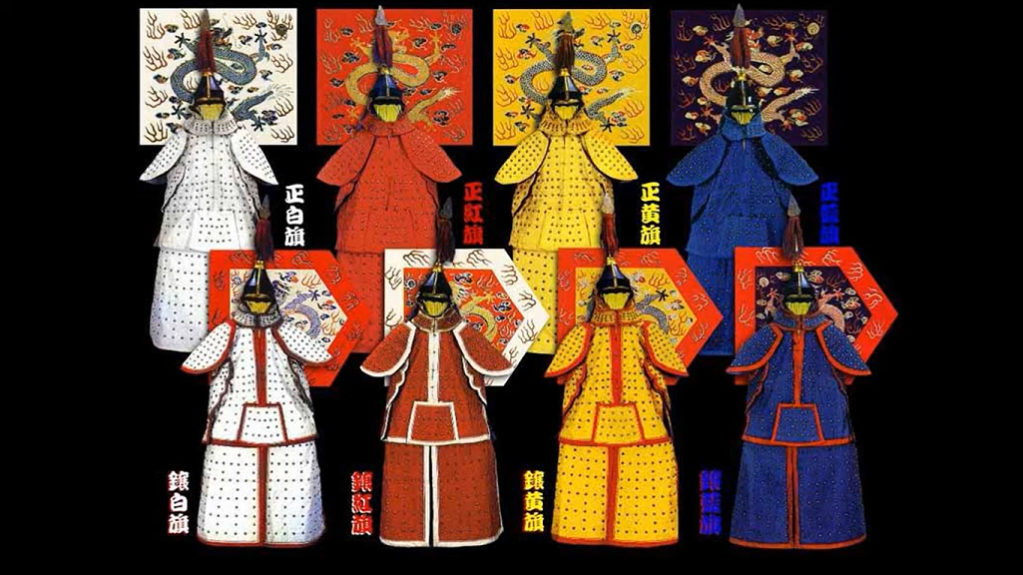
The Eight Banners: the original White, Red, Yellow and Blue as well as the Border Banners of the same colours.
This episode we look at the Eight Banner system that made the Jurchen people under Nurhaci such a devastating military force. We note how policies began changing due to necessity, as Nurhaci sought to consolidate the lands and people under his control, as well as continue the empire’s expansion. We end with a pivotal moment for the Jin Dynasty, the Battle of Ningyuan.
Zheng Zhilong (merchant, translator, pirate, naval tactician and Admiral of the Chinese fleet) has a key role in the history surrounding Taiwan. No less important – in fact, arguably more important – is the role that his son, Zheng Chenggong, would play. To understand the role he played, it is important that we look at his childhood, his family dynamic and the world in which he was growing up.
The late Ming Empire.
If one follows this link to the Wikipedia page on events of the 17th Century, one could be surprised by the number of entries that relate to war.
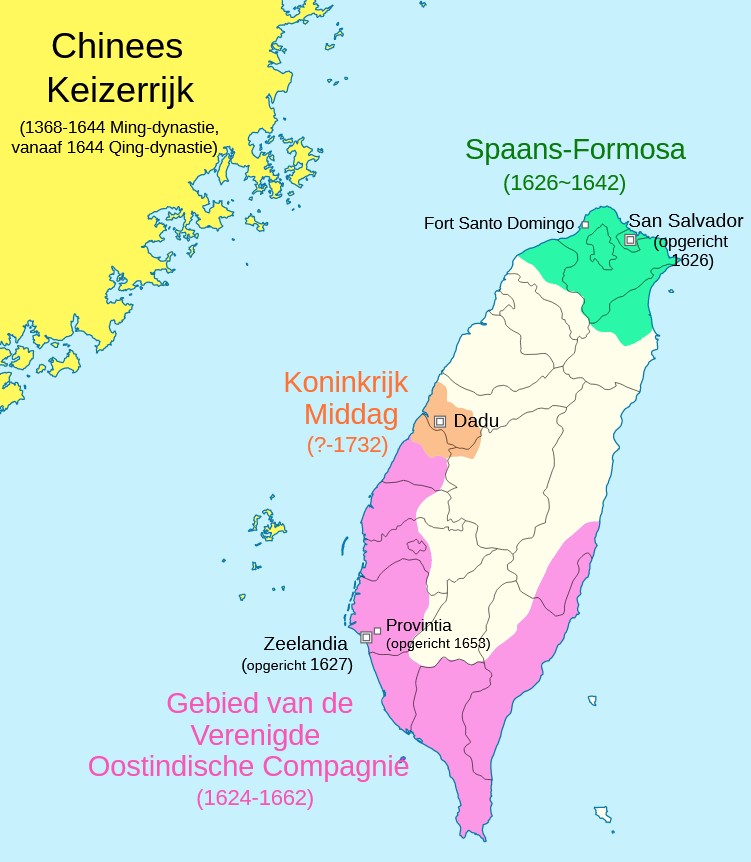
After a quick recap of the Spanish and Dutch influence in Taiwan (as well as taking a broader look to encompass the ongoing Eighty Years War), we look at how changes weakened the Spanish position in Taiwan. The Dutch would take advantage of this to try push the Spanish off Taiwan and claim control over the whole island for themselves. This culminated in the battle for San Salvador, the Spanish fortress in Keelung (Jilung).
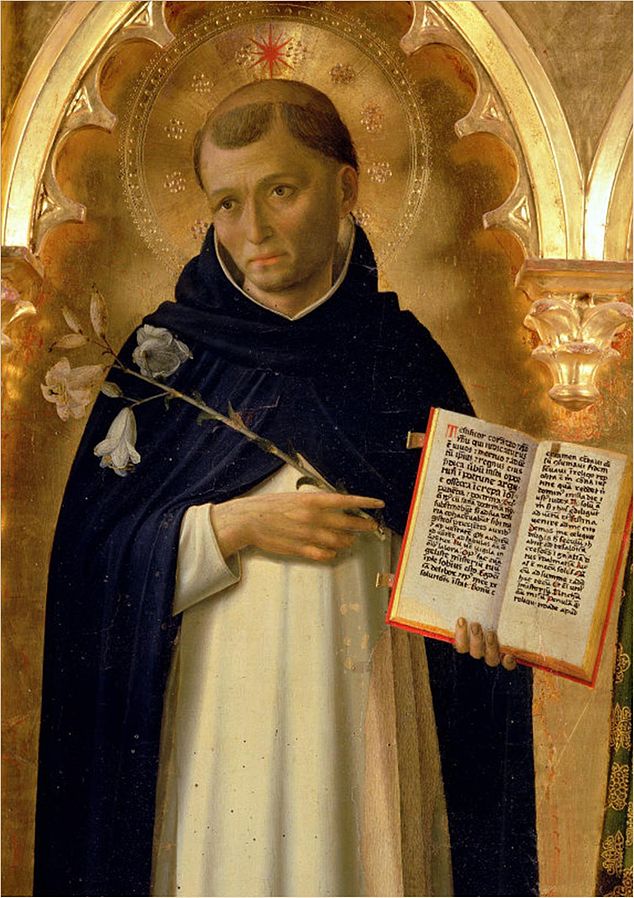
The mendicant religious orders within the Catholic church, started in the 13th Century, were products of the highly religious and meant to rebuild the church’s failing image. Over the centuries rivalries grew between these orders and, although they had generally the same goals and often worked together, they also vied with one another for power and influence. The Order of St. Dominic led the Catholic charge into Hermosa, partly to counter the protestant Dutch in the south, but mostly with an eye to forging new pathways to China and Japan. Here we look at a few of the most prominent of these Dominicans and their actions in Taiwan.
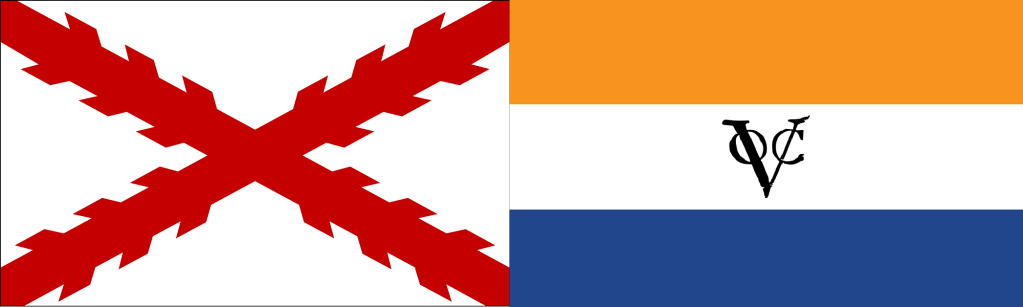
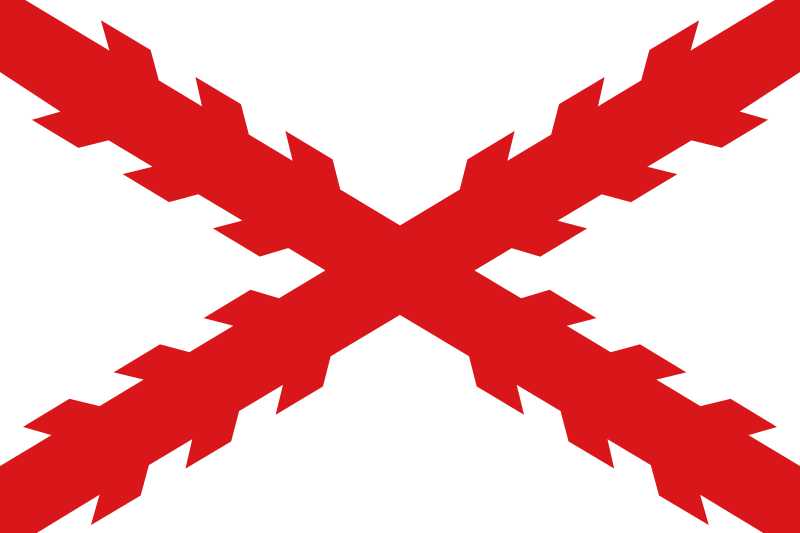
Flag with the Cross of Burgundy, used by the Spanish Empire.
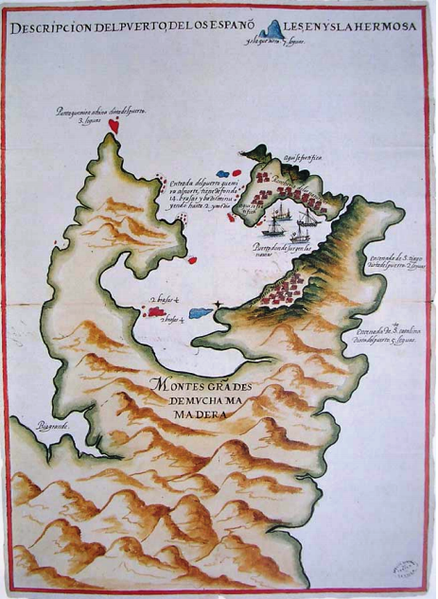
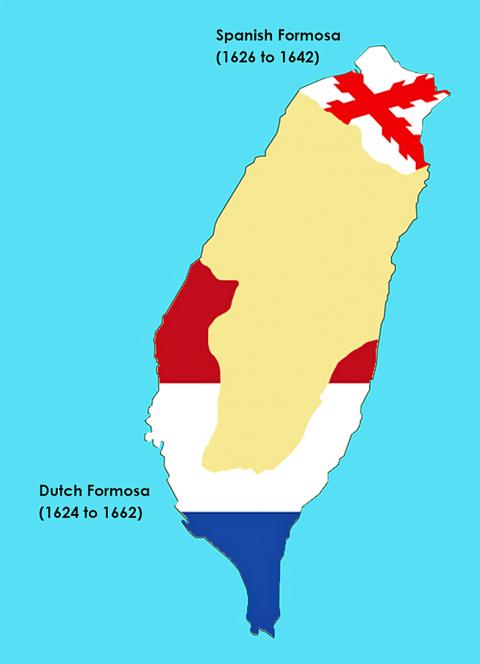
From 1624 the Dutch were encamped in southern Formosa (their name for Taiwan) and heavily disrupting trade in the region for the Spanish and Portuguese. By 1626 the Spanish had decided to take action and sent an expedition to form a colony in northern Hermosa (their name for Taiwan). After finding an apparently perfect place, complete with a village ready and waiting for them to occupy, they began experiencing difficulties. Supplies were in short demand, as Hermosa was the most distant outpost of the Spanish empire.
(above left) an image of Keelung Bay from 1626 showing what is today known as Heping (Peace) Island in the north. (above right) an image of Taiwan from the late 1630s showing the Dutch in the south and the Spanish in the north.
In this episode we discuss the religion of the indigenous peoples of Taiwan, including their gods and ancestors, the duties of the priestesses and how they deal with illness and death. We also look at their architecture, their various arts and crafts, including pottery and fabric, as well as their styles of tattoos.
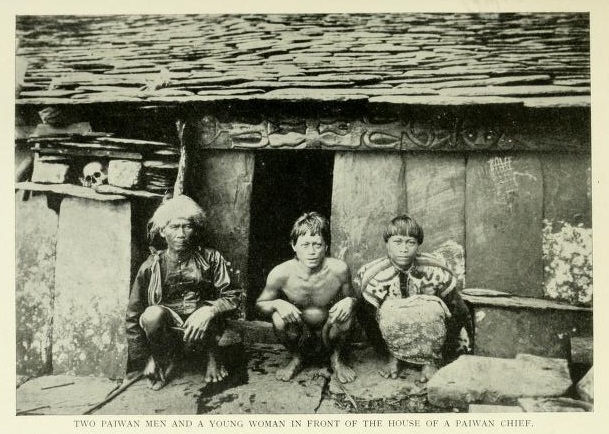
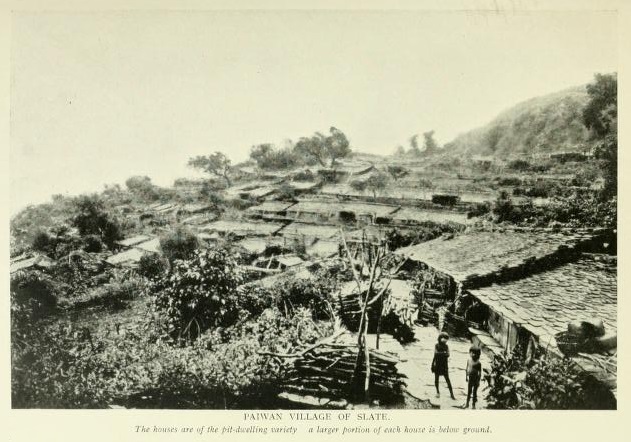
People squatting in the same manner that men do during courtship rituals. Note the slate walls and roofing of the Paiwan buildings, including the artwork above the door indicating it to be a chief’s house.
The people in the picture are children, showing you how low the Paiwan houses are. Most of the house is subterranean.
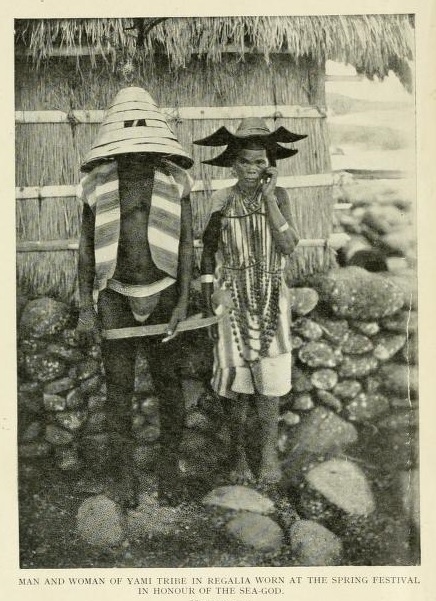
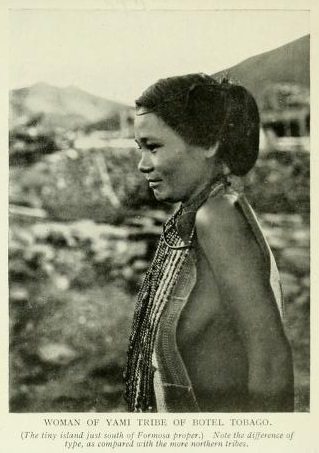
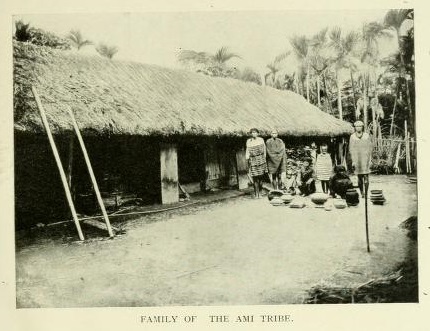
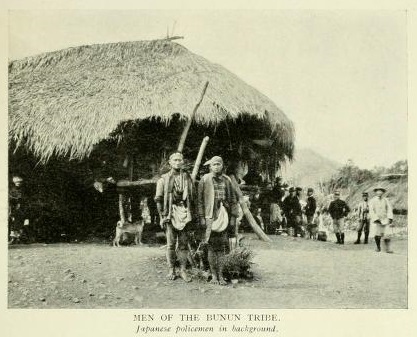
(left) A carving of a Paiwan ancestor on a slate in front of a chief’s house. (right) People from the Yami [Tao] of Orchid Island before a bachelor-house.(left) A Yami man and woman in ceremonial dress to celebrate the Spring Festival. (right) A Yami woman from the Yami tribe showing the differences in facial features and dress.(left) An Ami family stands in front of their home. (right) Men from the Bunun tribe, with Japanese officers standing in the background.An example of women’s facial tattoos in Tayal culture, 2006. Here the tattoos cover the entire space below the bottom lip, as opposed to only partially, as Janet McGovern observed in 1916.
For those of you interested in reading McGovern’s work for yourself, here are some links to online versions of it. One long scrolling page from Project Gutenberg or as a flip book from Archive.org or another flip book by Manybooks.
Janet Blair Mongomery McGovern was an anthropologist and explorer who visited Formosa from 1916-1918 during the first phase of the Japanese colonial period. While ostensibly working as an English teacher, she spent her free time travelling the countryside to meet and learn about the indigenous peoples of Formosa. Using the information in her book, which has the same title as this episode, we will learn all we can about the Taiwanese indigenous and compare it to Dutch records from the 17th Century.
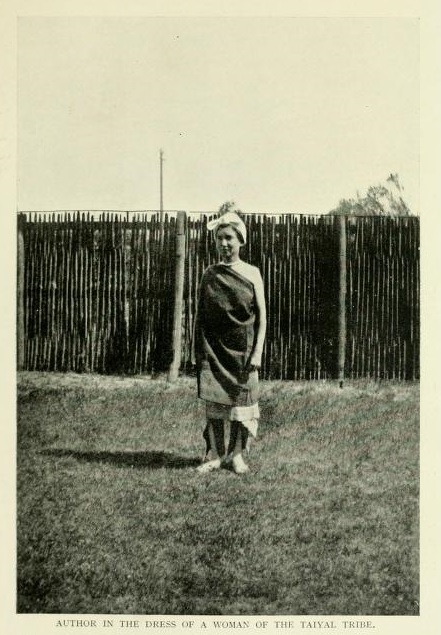
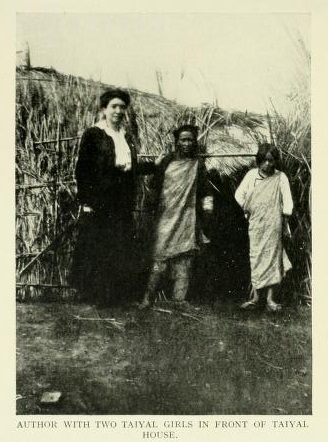
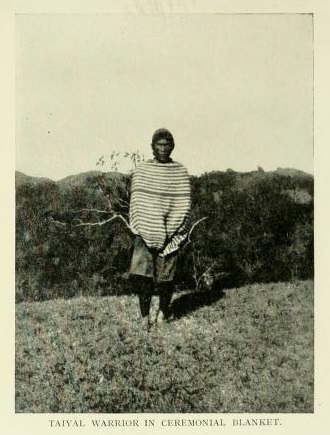
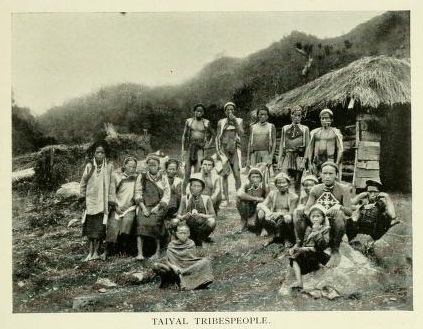
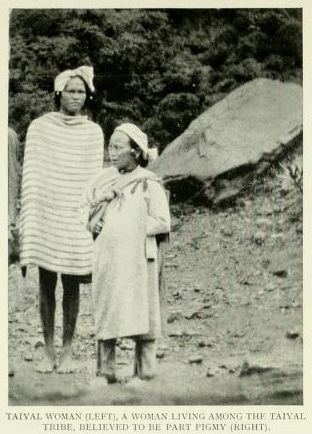
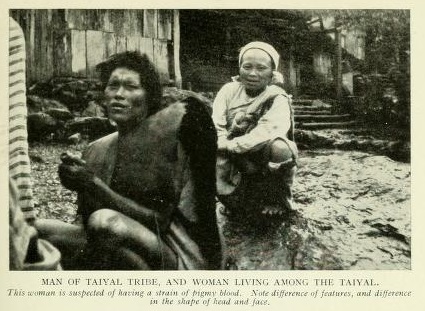
Janet McGovern (left) dressed in traditional Taiyal garb and (right) standing with two Taiyal girls.Pictures of Taiyal people, including one of a Taiyal village’s skull shelf.A woman living amongst the Taiyal people suspected of having pigmy ancestory. (left) pictured besides a Taiyal woman. (right) pictured crouched by a Taiyal man.
Janet McGovern’s mapping of the indigenous distribution across Formosa.
Link 1 and Link 2 to newspaper articles on the skull discovered in 2022 believed to have belonged to a pygmy.









 Taiwan Through Time