Zheng Zhilong (merchant, translator, pirate, naval tactician and Admiral of the Chinese fleet) has a key role in the history surrounding Taiwan. No less important – in fact, arguably more important – is the role that his son, Zheng Chenggong, would play. To understand the role he played, it is important that we look at his childhood, his family dynamic and the world in which he was growing up.
The late Ming Empire.
If one follows this link to the Wikipedia page on events of the 17th Century, one could be surprised by the number of entries that relate to war.
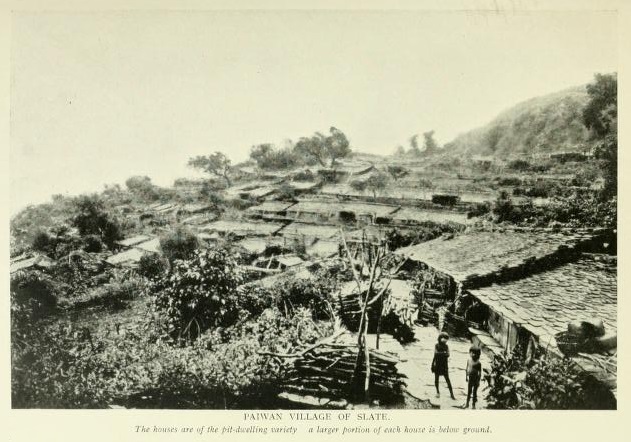
In this episode we discuss the religion of the indigenous peoples of Taiwan, including their gods and ancestors, the duties of the priestesses and how they deal with illness and death. We also look at their architecture, their various arts and crafts, including pottery and fabric, as well as their styles of tattoos.
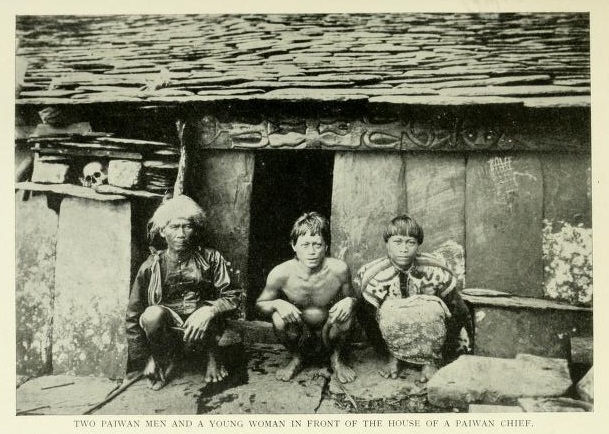
People squatting in the same manner that men do during courtship rituals. Note the slate walls and roofing of the Paiwan buildings, including the artwork above the door indicating it to be a chief’s house.
The people in the picture are children, showing you how low the Paiwan houses are. Most of the house is subterranean.
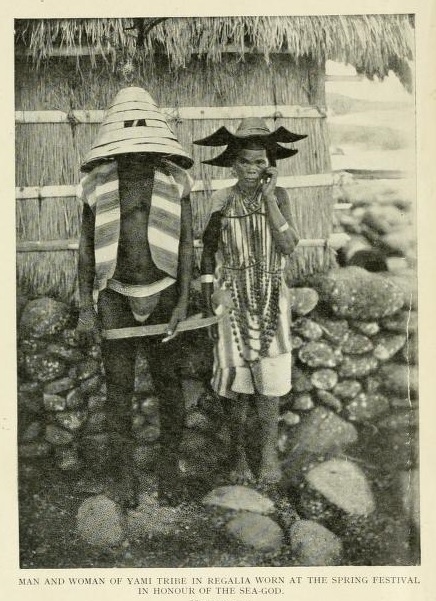
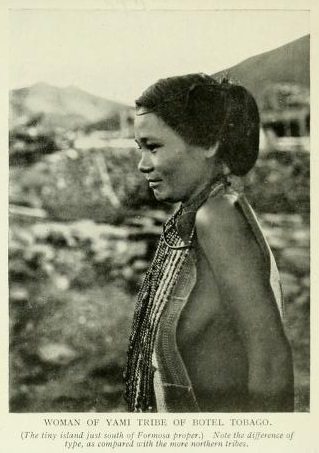
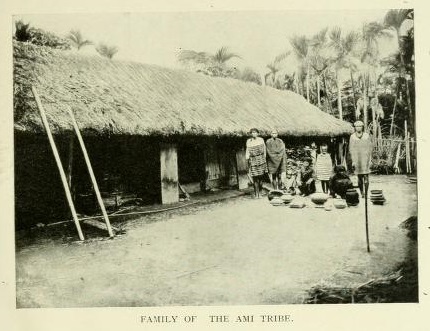
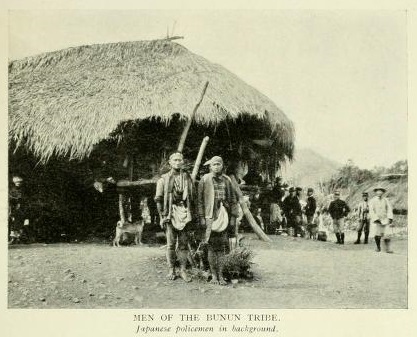
(left) A carving of a Paiwan ancestor on a slate in front of a chief’s house. (right) People from the Yami [Tao] of Orchid Island before a bachelor-house.(left) A Yami man and woman in ceremonial dress to celebrate the Spring Festival. (right) A Yami woman from the Yami tribe showing the differences in facial features and dress.(left) An Ami family stands in front of their home. (right) Men from the Bunun tribe, with Japanese officers standing in the background.An example of women’s facial tattoos in Tayal culture, 2006. Here the tattoos cover the entire space below the bottom lip, as opposed to only partially, as Janet McGovern observed in 1916.
For those of you interested in reading McGovern’s work for yourself, here are some links to online versions of it. One long scrolling page from Project Gutenberg or as a flip book from Archive.org or another flip book by Manybooks.
After destroying Zheng’s fleet and liberally plundering the Chinese coast, Putmans is called to battle by Zheng and his hastily assembled replacement fleet. Can the Chinese turn the tide? What will be the long term consequences of this battle politically and economically?
The Battle of Liaoluo Bay, October 1633. [Image from Lost Colony by Tonio Andrade]Sketch of Fort Zeelandia Circa 1635, by artist Johannes Vingboons.
Edit: I looked up the UK’s refugee plan and the African country was Rwanda. Rwanda may have a rather poor track record in terms of human rights for anyone reading up on the Rwandan Genocide of 1994. One consequence of that was a vast reduction in the male population of Rwanda, which led to many leadership positions being filled – by necessity – by women. This actually led to some of the most progressive laws towards women and women’s rights than anywhere else in the world. Just food for thought. Link here.
Pieter Nuyts (also spelt Nuijts) was the third Dutch Governor of Formosa. He was a father, a businessman, an explorer and a politician. He was also opportunistic, sometimes to his own detriment. This episode looks at his time as governor of Formosa.
In editing I discovered my Dutch pronunciation let me down a few times, especially toward the beginning of the recording. The Dutch pronunciation of Nuyts is ‘notes’, while the English pronunciation is ‘newts’.
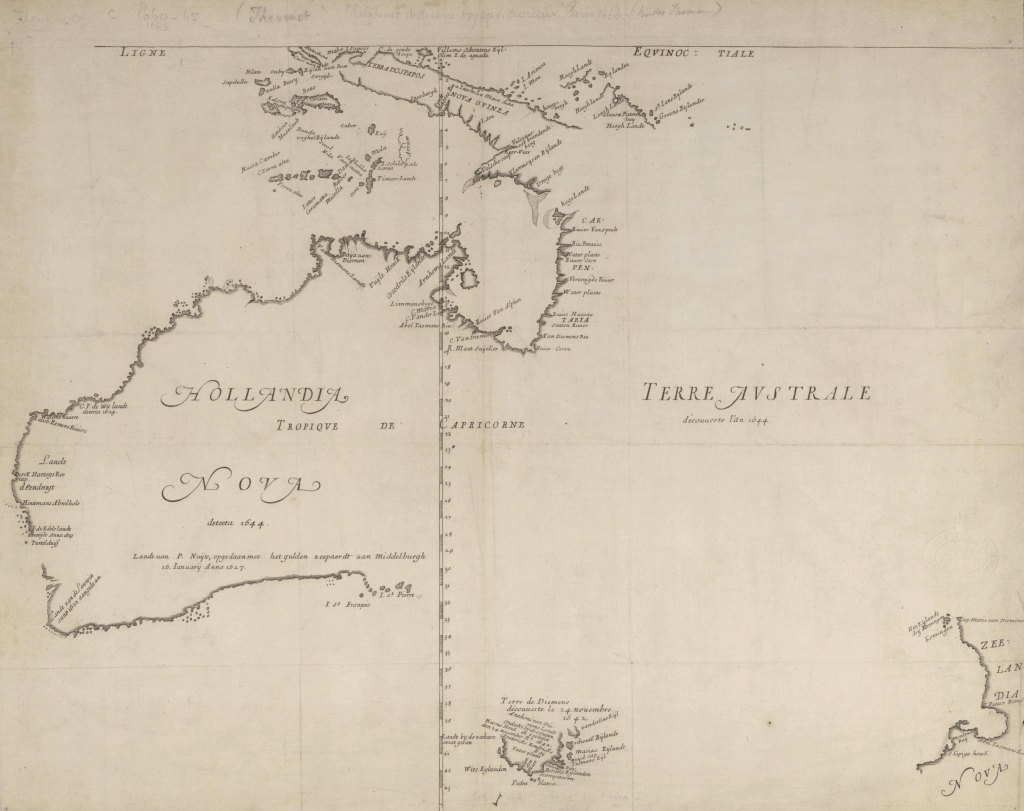
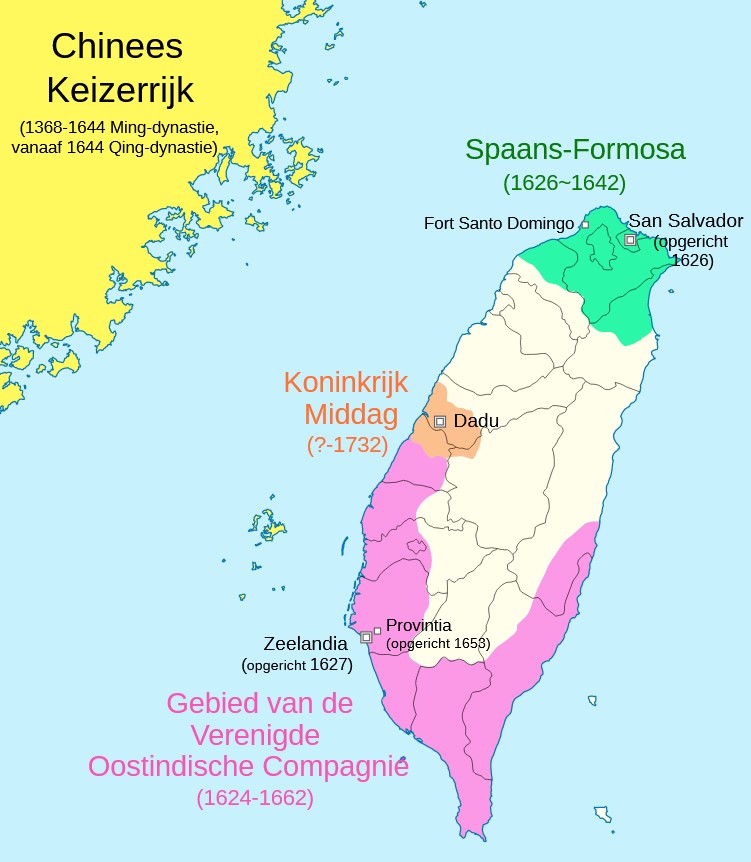
A map from 1644 which carries both ‘New Holland’ and ‘Terra Australis’ as names for Australia. In the southwest corner you can see the area explored by Nuyts’ ship, het Gulden Zeepaert (the Golden Seahorse), marked as the land of Pieter Nuyts.A map showing the area of Dutch control on Formosa circa 1650s and the area the Spanish control circa late 1630s. The orange area is a kingdom of indigenous people known locally as Dadu, but to the Dutch as the Midday Kingdom.A 1629 drawing showing an artist’s impression of the storming of Nuyts’ office, when Hamada Yahei held him hostage.







 Taiwan Through Time